Landing Page URL Builder

Affiliate guide

Affiliate Tracking Link Builder

Build one clean affiliate tracking link, keep partner and creative labels readable, and make sure the final click path is still transparent before you hand it to a partner.
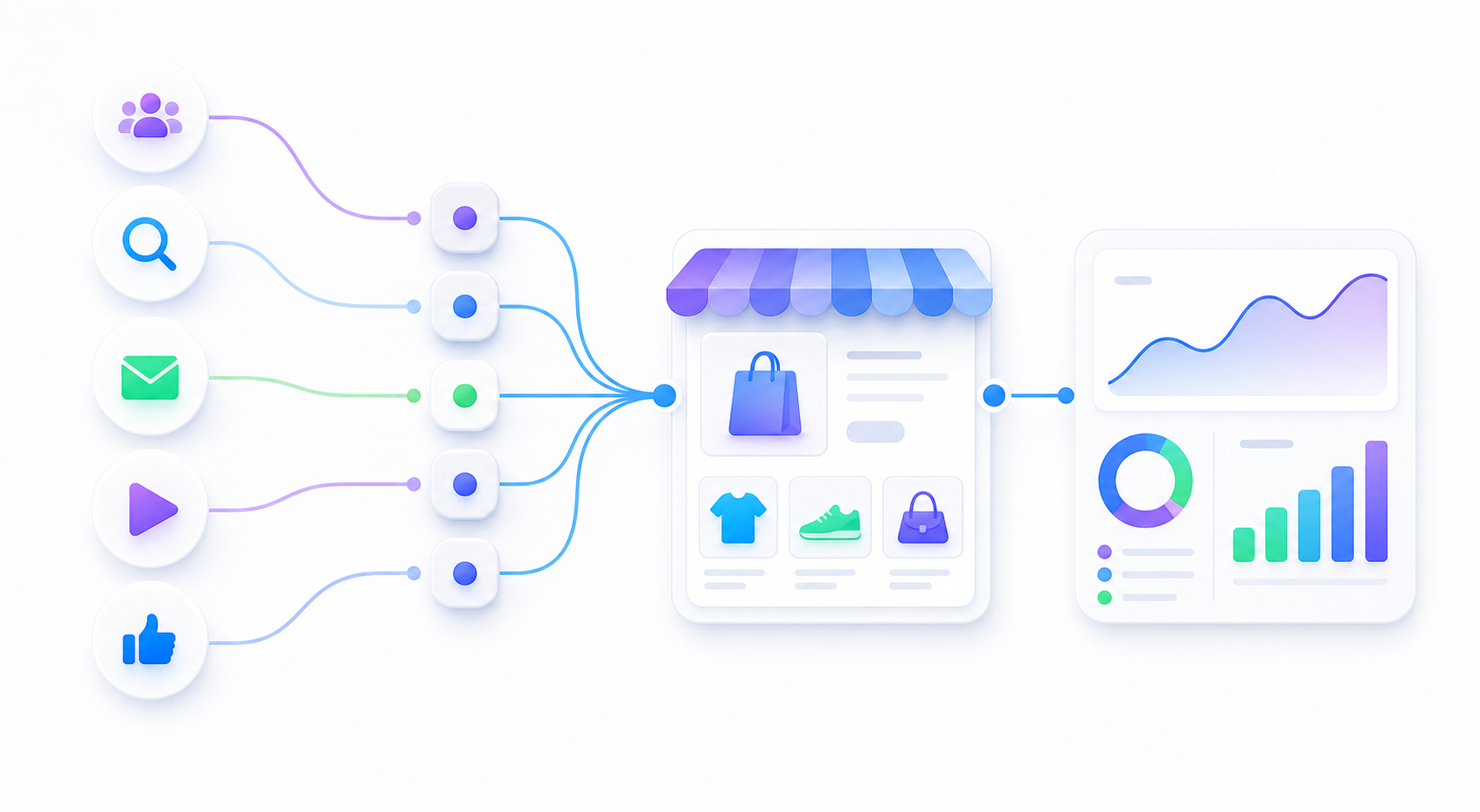
Affiliate traffic flowing into an ecommerce store and analytics report

Best first path

Keep the partner link readable, preserve any existing affiliate parameters, and only add more structure once the network or partner format is clear.

What usually breaks

Too many sub-IDs, partner parameters, or redirects can make the final tracking link hard to audit and harder to reconcile later.

Success signal

The final link opens correctly, keeps the partner data intact, and still gives you a usable source path in GA4.

How to build an affiliate tracking link

  1. Paste the final landing page URL into the homepage builder.
  2. Select Affiliate as the traffic channel.
  3. Use a readable partner or placement name so the link is still understandable later.
  4. Keep the approved partner parameters if the network already uses them.
  5. Only switch to stable IDs when your partner reporting is already built for it.
https://example.com/products/sample-product?utm_source=affiliate_partner&utm_medium=affiliate&utm_campaign=summer_partner_push&sub1=partner_name&sub2=placement_name&sub3=creative_name

What to keep in mind

Need Recommended path Reason
Partner launch Readable sub-IDs Easier for both sides to inspect the link without parsing a dozen fields.
Multiple partners Stable IDs Better when the same structure needs to work across many partner accounts.
Existing network link Preserve it first Do not break a working affiliate link just to make it look prettier.

How to verify the affiliate link

  1. Open the final URL in a browser first.
  2. Check that the partner and campaign labels stay intact after any redirects.
  3. Verify the page opens correctly and the tracking parameters still exist.
  4. Look for the visit in GA4 Realtime if the flow is meant to be measured there.
  5. If the link is too messy, simplify the naming before launch.

Common mistakes

  • Overwriting partner parameters that were already working.
  • Using one format for every partner even when the network expects different sub-IDs.
  • Mixing too many layers of redirects and losing the final destination.
  • Skipping the browser click test before sending traffic.

Build the affiliate link, then test it in the browser

Transparent partner links are easier to trust, easier to debug, and easier to hand off to someone else later.

Build a free link