Best first path
Use static UTMs first. Meta placeholders are useful later, but they are not required to prove that your store and GA4 are reading campaign traffic correctly.
Channel guide
Build a clean Meta campaign URL for your store, keep naming readable, and verify that GA4 still sees the visit plus the ecommerce events you care about.
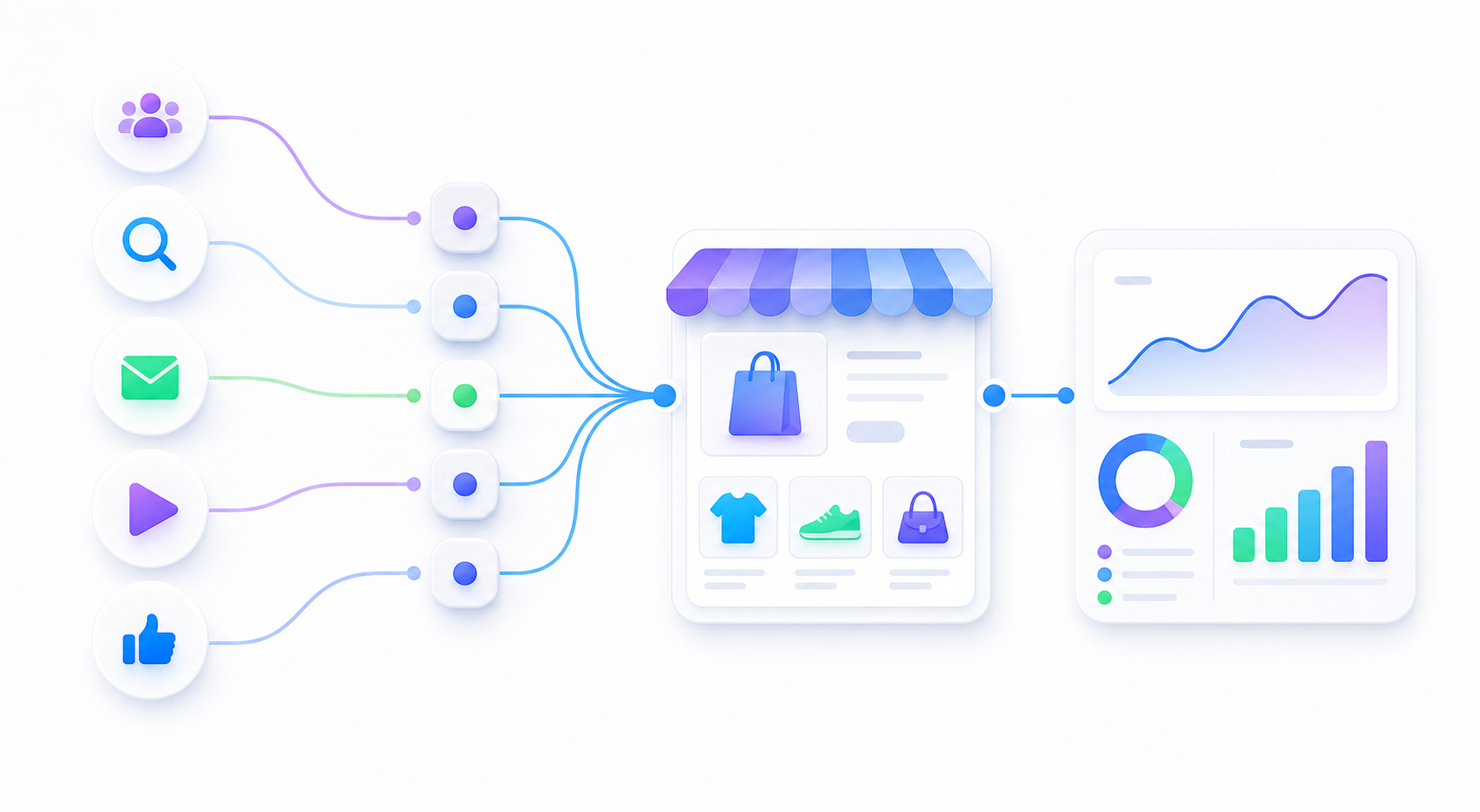
Use static UTMs first. Meta placeholders are useful later, but they are not required to prove that your store and GA4 are reading campaign traffic correctly.
Broken redirects, duplicate tags, and overcomplicated placeholder setups can make Meta traffic look inconsistent inside GA4.
GA4 Realtime shows the visit with utm_source=meta, utm_medium=paid_social, and the same campaign naming you set before launch.
Meta / Facebook / Instagram.summer_drop_canvas_bag.utm_source=meta and utm_medium=paid_social stable across campaigns.utm_content only when you need creative or ad-level comparison.| Use case | Recommended path | Reason |
|---|---|---|
| First launch | Static UTMs | Simpler to verify when you only need campaign-level reporting. |
| Creative testing | Static or placeholder utm_content |
Useful if you want ad-level comparison and the token format is confirmed. |
| Shared naming across teams | Static UTMs | Reduces confusion when multiple buyers or creators are involved. |
| Advanced account setup | Placeholder mode after validation | Only worth it once the simple path is already proven. |
view_item, add_to_cart, begin_checkout, and purchase where supported.The cheapest debugging path is still manual: generate one clean URL, click it, check GA4 Realtime, then launch with confidence.