Best first path
Keep the product or collection link readable and only add enough UTM structure to answer the reporting question.
Shopify guide
Use these starter examples to keep Shopify traffic readable while still capturing the campaign context you need for reporting and launch QA.
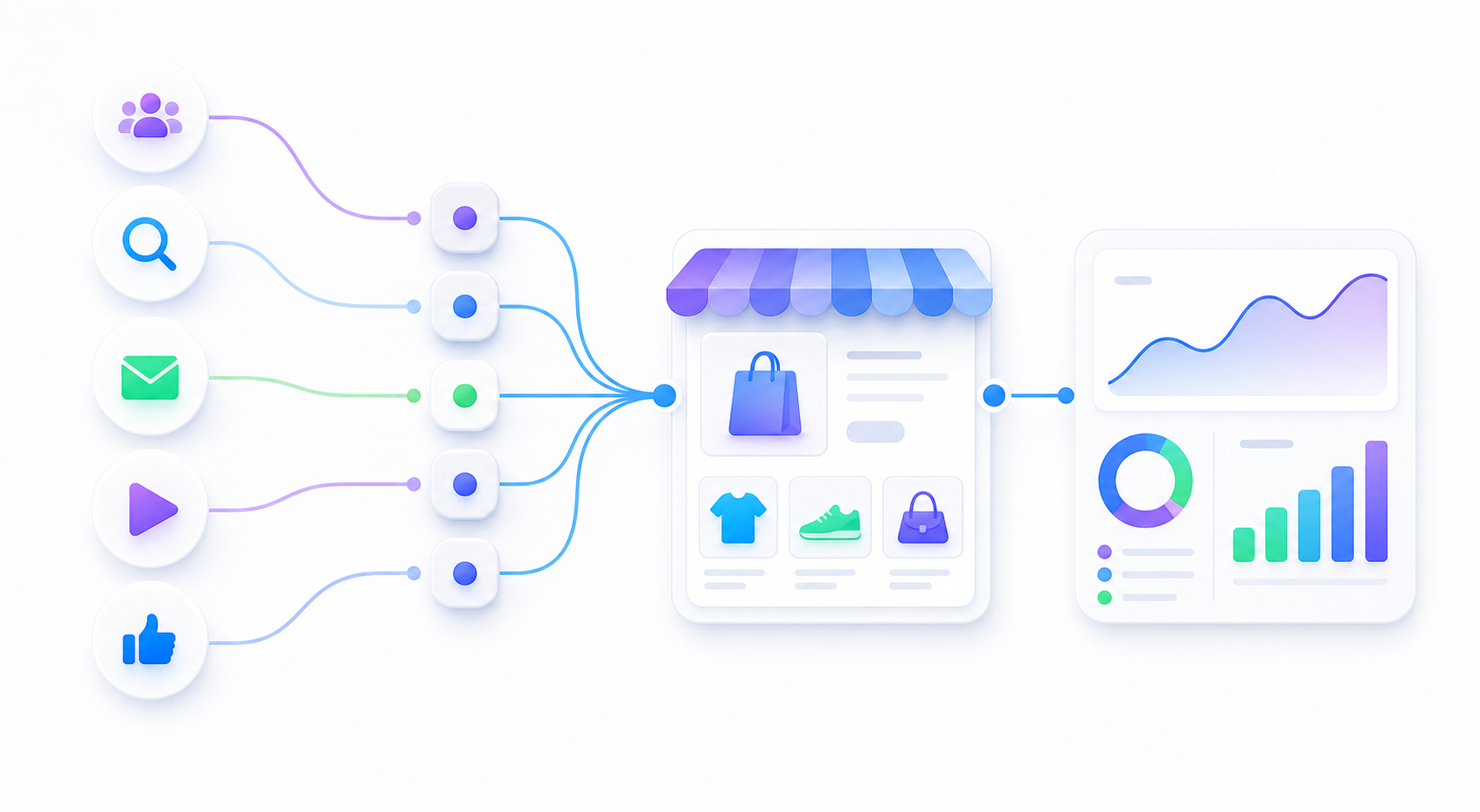
Keep the product or collection link readable and only add enough UTM structure to answer the reporting question.
Duplicate tags, messy naming, or overcomplicated redirect chains can make Shopify reporting harder to trust.
The Shopify URL still opens the right page and GA4 still reads the source, medium, and campaign cleanly.
A product URL is the simplest test case when you want to verify the landing page and the source labels together.
A collection URL works well when you want a broader ecommerce entry point instead of a single product page.
Readable examples make it much easier to keep the store setup stable across launches.