Best first path
Use one structure for source, medium, campaign, and content so your team can read it later without guessing.
Naming guide
Use one naming pattern across channels so your source, medium, campaign, and creative labels stay readable in GA4 instead of turning into a pile of one-off strings.
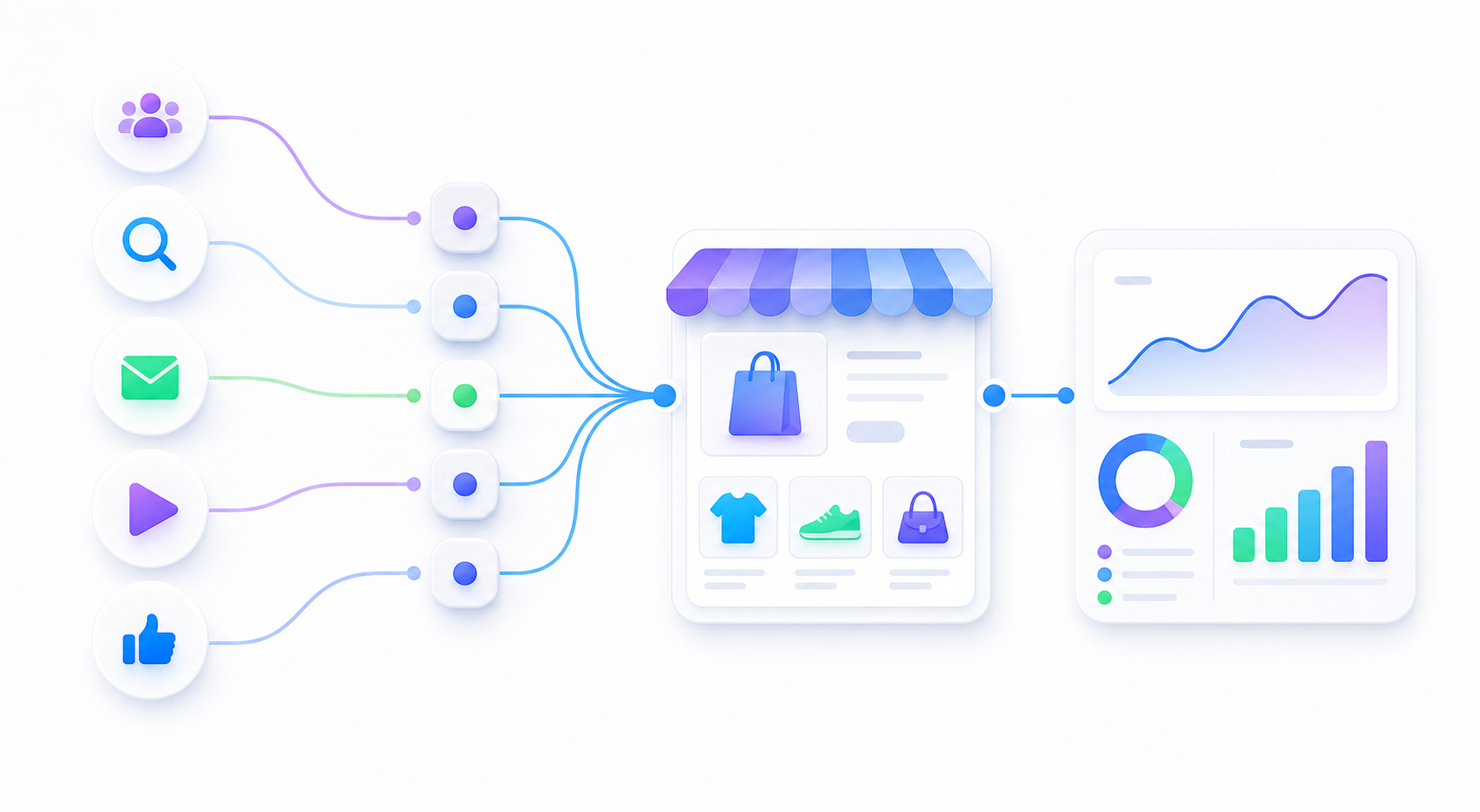
Use one structure for source, medium, campaign, and content so your team can read it later without guessing.
Campaign names drift when every platform or person invents its own separator, order, or word style.
The same naming pattern works across Meta, Google, TikTok, AppLovin, email, and affiliate traffic.
Use this shape as a baseline:
meta or google.paid_social or paid_search.| Channel | Example | Why it works |
|---|---|---|
| Meta | meta / paid_social / us / launch / spring_sale / hero_video |
Readable and easy to scan in GA4. |
google / paid_search / us / launch / running_shoes / headline_a |
Works for search and YouTube-style naming. | |
| TikTok | tiktok / paid_social / us / launch / ugc_test / hook_1 |
Useful for creator or ad iteration. |
| Affiliate | affiliate_partner / affiliate / us / partner / q2_push / placement_a |
Lets you compare partner performance later. |
Most reporting mess starts with inconsistency, not with the analytics platform itself.