Best first path
Use one stable meaning for each parameter so reports stay readable over time.
Cheat sheet
A practical reference for keeping UTM fields readable across Meta, Google, TikTok, affiliate, email, SMS, and QR campaigns.
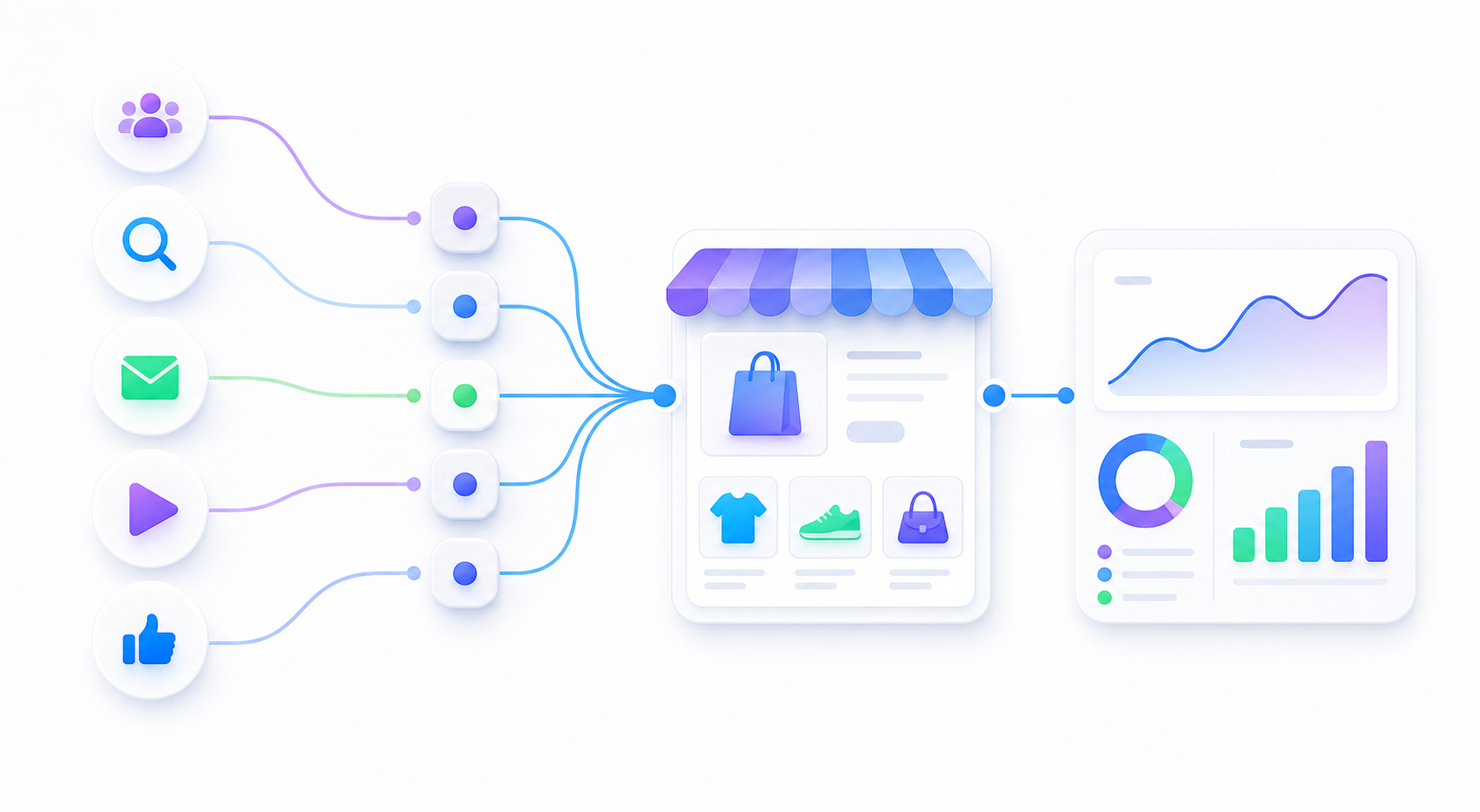
Use one stable meaning for each parameter so reports stay readable over time.
Changing the meaning of a field every time makes the campaign history hard to compare.
The same fields always mean the same thing, even when the channel changes.
| Field | What it should mean | Example |
|---|---|---|
utm_source |
The traffic source or platform | meta, google, tiktok |
utm_medium |
The traffic type | paid_social, paid_search, affiliate |
utm_campaign |
The campaign or launch name | spring_sale, black_friday_2026 |
utm_content |
The creative, ad, or variant label | hero_video, ugc_1 |
utm_term |
Optional keyword or audience label | running_shoes, lookalike_1 |
This is the kind of transparent URL structure the homepage builder is designed to generate.
Readable fields are easier to trust, easier to compare, and easier to hand off later.