Best first setup
Use a product, category, or campaign landing page URL and add only the UTM fields you will actually read later.
Platform guide
Build one clean WooCommerce ad landing page URL, keep the campaign labels readable, and verify the visit plus ecommerce events before paid traffic scales.
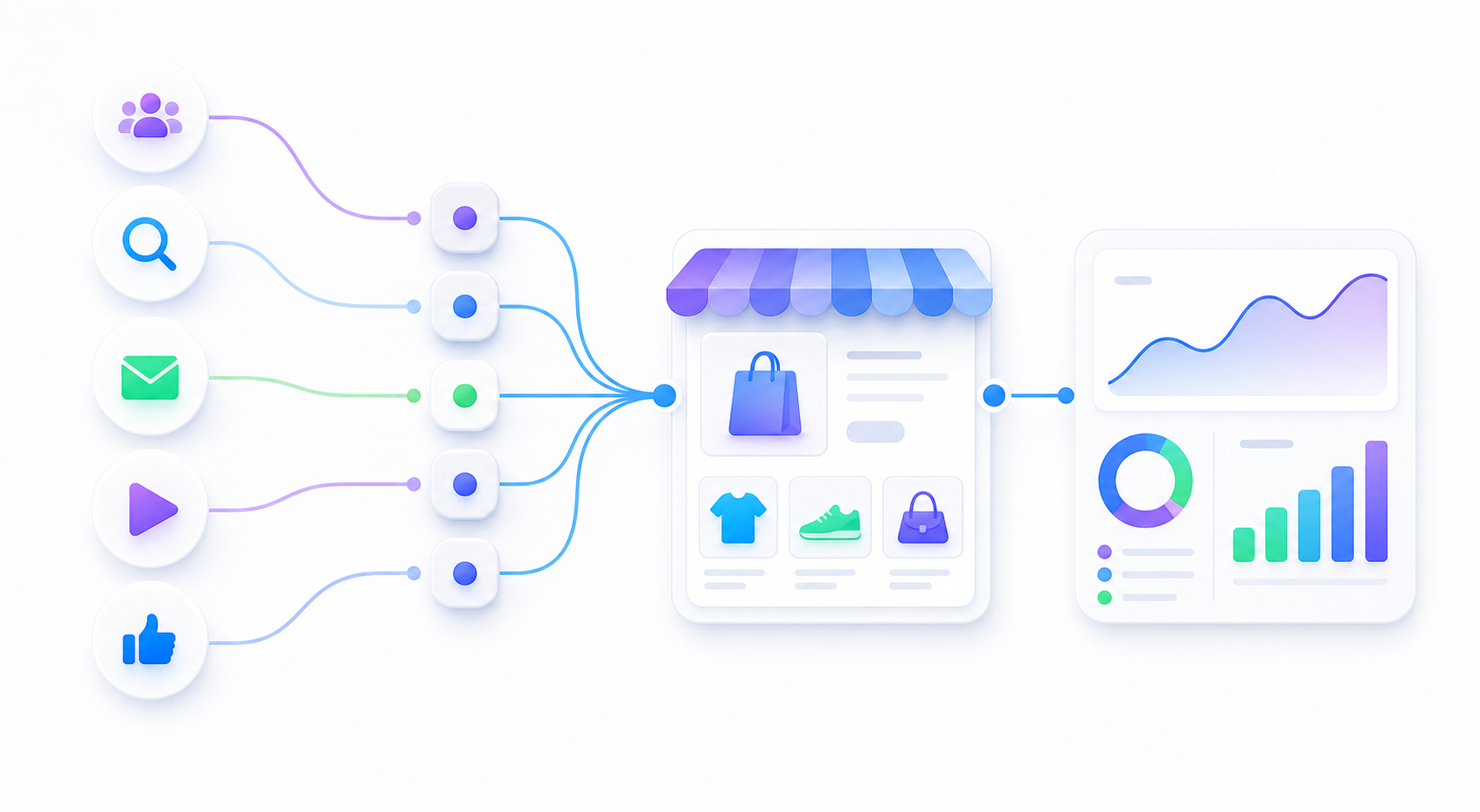
Use a product, category, or campaign landing page URL and add only the UTM fields you will actually read later.
WordPress plugins, redirects, caching, and duplicate tag installs can make the first visit look different from checkout reporting.
The final URL opens the right WooCommerce page and GA4 Realtime shows the expected source, medium, and campaign labels.
Use a readable campaign name first. Add platform macros only after the ad account preview confirms the final click behavior.
| Check | Good signal | If it fails |
|---|---|---|
| Visit | Realtime shows the clicked session. | Check tag install, consent, cache, and browser blockers. |
| Campaign labels | Source, medium, and campaign match the URL. | Check redirects and duplicate UTM keys. |
| Ecommerce events | Product, cart, checkout, and purchase events look believable. | Check WooCommerce tracking plugin, theme code, or GTM setup. |
A clean URL plus one GA4 Realtime check is the fastest way to catch tracking mistakes before budget moves.